Apel:
Digital Europe – DIGITAL-2025-SKILLS-08-VIRTUAL-WORLDS-ACADEMY-STEP
Type of action: DIGITAL-LS / Proposal number: 101298981
Perioada de desfășurare: 2026-2030
Grant UE: 8.544.235,24 € (UNATC – 372.477,70 €)
Apel:
UEFISCDI – Programul 5.8. – Cooperare europeană și internațională.
Subprogramul 5.8.2. – Inițiative europene și internaționale.
Europa Digitală – Academia de Competențe pentru Lumile Virtuale.
PN-IV-P8-8.2-EUD-2026-0073
Perioada de desfășurare: 01.09.2026 – 01.09.2029
Grant UEFISCDI: 866.720 lei
Parteneri:
Cyens Centre of Excellence (CY) (coordonator), Suomen ympäristöopisto SyklI oy (FI), SC Nedho Animation SRL (RO), Nedho (FI), XB Bootcamp GmbH (DE), Akmi Anonimi Ekpaideftiki Etairia (EL), Medien Bayern GmbH (DE), Universitatea Națională de Artă Teatrală și Cinematografică (RO), Skillnet Ireland Company Limited by Guarantee (IE), Universitat Autònoma de Barcelona (ES), Instytut Chemii Bioorganicznej Polskiej Akademii Nauk (PL), École Nationale Supérieure d’Arts et Métiers (FR), Europäischer Verband Beruflicher Bildungsträger (DE), XR4Europe (BE), BSD Societa a Responsabilita Limitata (IT), Università Telematica Internazionale Uninettuno (IT), Secretariatul Național al Rețelei Universităților (RO), Università degli Studi di Roma La Sapienza (IT), EIT Manufacturing South SRL (IT), Universitat Politècnica de Catalunya (ES), Comau SpA (IT).
Descrierea proiectului:
Evoluția rapidă a tehnologiilor digitale imersive, precum realitatea virtuală (VR), realitatea augmentată (AR) și realitatea extinsă (XR), a condus la apariția Lumilor Virtuale (VW) ca instrumente transformatoare în diverse sectoare. Cu toate acestea, peisajul educației și al formării profesionale nu a răspuns încă pe deplin cererii tot mai mari de competențe specializate legate de VW. Virtual Worlds Skills Academy (ViWAS) își propune să reducă acest decalaj de competențe prin dezvoltarea unui ecosistem cuprinzător de competențe și formare și adaptat viitorului, care să echipeze cursanții, educatorii și profesioniștii cu abilitățile necesare pentru a prospera și a modela economia Lumilor Virtuale. ViWAS este o inițiativă educațională de pionierat care combină forța modelului organizațional RenDanHeYi (2021) cu agilitatea sistemului de franciză, aplicate într-un context educațional. ViWAS are o structură modernă de tip întreprindere-cloud și își propune să pregătească viitorii dezvoltatori, profesori, arhitecți, designeri și utilizatori ai Lumilor Virtuale printr-o abordare fundamental nouă a educației, bazată pe structuri AGILE, gândire de tip „design thinking” și o mentalitate antreprenorială. Proiectul va contribui la transformarea digitală a UE prin perfecționarea și recalificarea forței de muncă în domeniul în plină expansiune al Lumilor Virtuale. Prin stimularea colaborării dintre furnizorii de educație, industrie și factorii de decizie politică, ViWAS va deschide calea către medii de învățare digitală incluzive, inovatoare și sustenabile în toată Europa. ViWAS se concentrează pe predarea și învățarea competențelor pentru, despre și în Lumi Virtuale, dezvoltând o rețea de centre de învățare capabile să se adapteze rapid la evoluția dinamică a VW, plasând cursantul în centrul procesului educațional și cultivând un spirit antreprenorial și o abordare de tip „design thinking” la toate nivelurile.
UNATC – ViWAS Staff
Dr. Alexandru I. Berceanu is a mixing-realities director and researcher conducting interdisciplinary research at the intersection of art and neuroscience. Starting with his doctoral studies, his research has centered on aggressive and prosocial behavior, using drama and immersive environments as investigative tools to develop emotional regulation through gamified approaches and theatrical representation. His results are published in international journals, and his artistic work covers interactive-media installations, VR, immersive environments, and theatre. He is an associate professor in the Animation and Interaction Department at UNATC Romania, where he also teaches in the Community and Therapeutic Theatre master’s program. At UNATC he initiated the International Center for Research and Education in Innovative and Creative Technologies (CINETic), as well as its master’s program in Interactive Technologies.
https://orcid.org/0000-0001-9115-9399
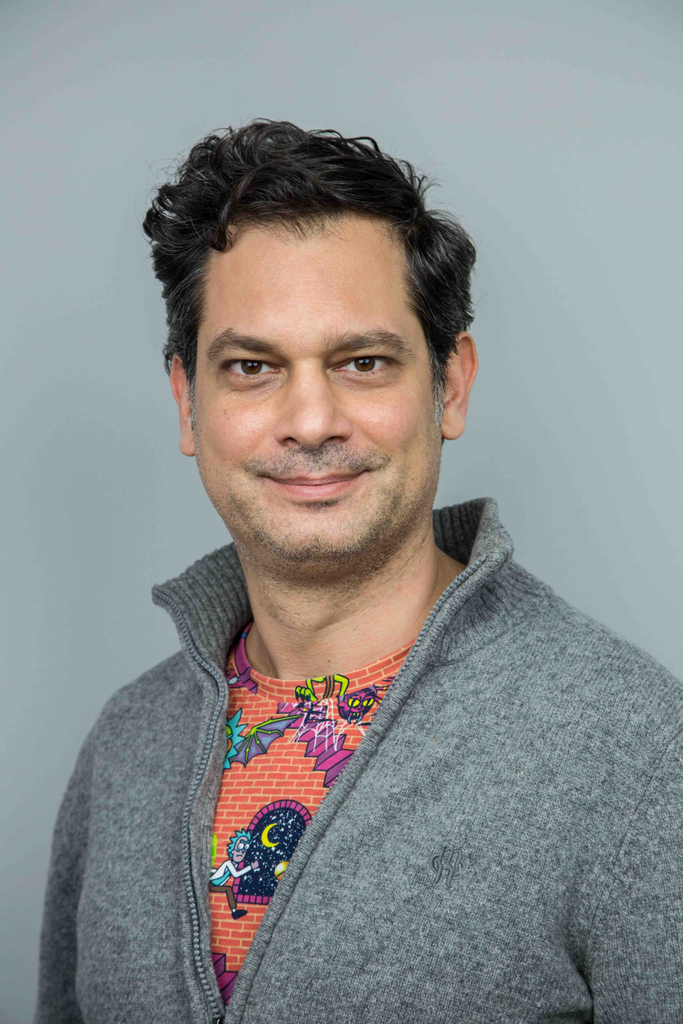
Dr. Grigore Burloiu is a Lecturer in the Animation & Interactivity department at the National University of Theatre and Film in Bucharest, where he teaches Creative Coding, Interactive Music Systems and Game Development, and coordinates the Interactive Technologies for Performing and Media Arts M.A.
Grigore develops systems for expressive accompaniment and for interactivity in art. In 2024 he participated in the MODINA project alongside Simona Deaconescu with a lecture-performance where he developed AI systems for music and text interaction. He has also done practice-led research into motion and gesture sonification for interactive performance. His artistic collaborations have been presented internationally in venues such as Ars Electronica (AT), Vivid Festival (AU), Fete des Lumieres (FR), Prague Quadrennial of Performance Design and Space (CZ).
https://orcid.org/0000-0002-9059-9621
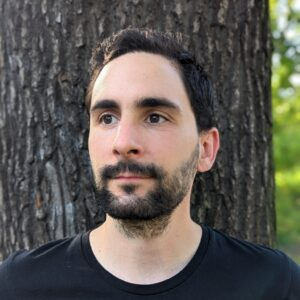
Dr. Marina Hanganu is a theatre director and a researcher at UNATC Bucharest, exploring the intersection of technology and the performing arts, with a focus on telematic and robotic performance. She has initiated and led several artistic research projects, including Little Rover (Micul Rover, co-funded by AFCN, 2026, ongoing), E-Waste E-Motion: A Robofable (co-funded by AFCN, 2025) and the Creative Europe-funded Tele-Encounters (2017–2019) and Tele-Encounters: Beyond the Human (2020–2023). Her work spans project management, artistic research, theatre directing, playwriting, and workshop facilitation for students, teenagers, and children. She holds a PhD in Theatre and Performing Arts on the topic of telematic theatre (UNATC), an MA in Advanced Theatre Practice (Royal Central School of Speech and Drama), and a BA in Theatre Directing (UNATC).
https://orcid.org/0009-0002-4627-7278
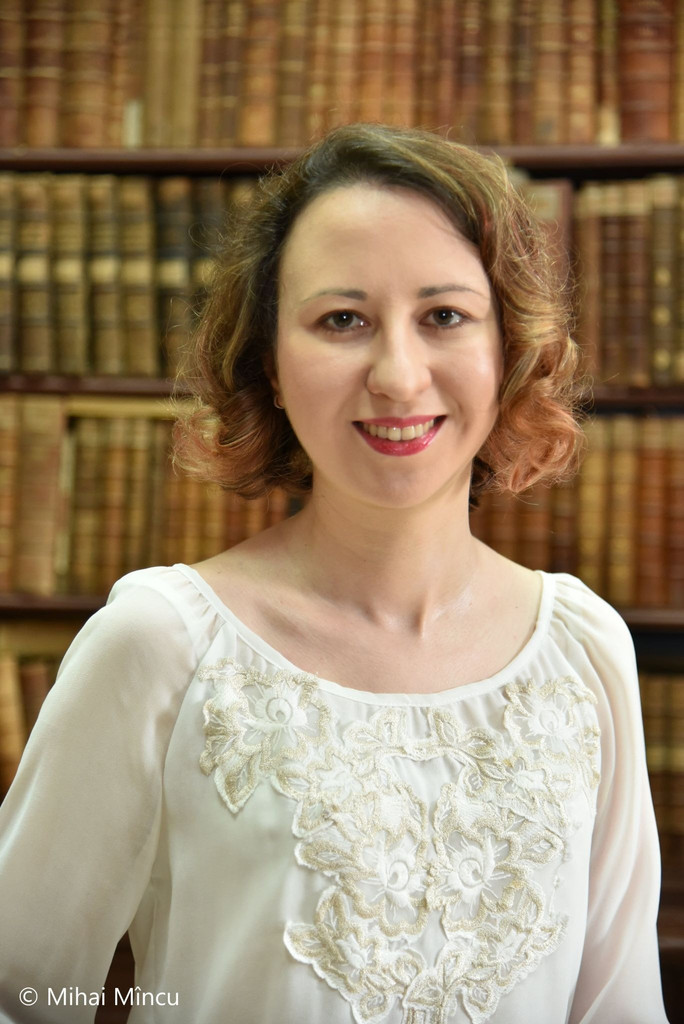
Georgiana Ene is a fourth-year PhD student at the National University of Theatre and Film “I.L Caragiale” in Bucharest, specialising in Theatre and Performing Arts. Her research is centred on the development of novel approaches to the marketing of national theatres in Romania, and her thesis is entitled “New marketing directions in national theatres in Romania”. Furthermore, she holds a Master’s degree in “Theatre Studies – Cultural Management and Marketing” from the same institution. Concurrently, she successfully completed a Master’s programme in Management and Communication at the National School of Political Science, specialising in Performance Management.
https://orcid.org/0000-0001-7280-6263

Ciprian Fācāeru is a pioneer of the XR scene, with over a decade of creative inquiry, design-led practice, and production at the forefront of emerging media technologies.
Research assistant within the Department of Research, Development and Innovation, CINETic – UNATC, co-founder of the Augmented Space Agency studio and Space Continuum association, Ciprian is one of the representative figures of XR practices in Romania.
Architect of immersive spaces, director of augmented experiences, and researcher of new media practices. His work is situated within the expanding continuum between physical and virtual space, tangible and intangible data, human and artificial intelligence. In this context, he examines how contemporary technologies reconfigure perception, presence, and modes of being in the world.
To navigate this expanse, he centres his design philosophy on agentic–environmental framework that guides the development of immersive systems structured around augmented human agency, extended spatial conditions, and mediated relations between bodies, technologies, and the built, virtual, and hybrid worlds they inhabit. Through this approach, he frames immersive media as a transdisciplinary territory operating across cultural, educational, scientific, industrial, and civic domains, transforming the ways spaces are imagined, narrated, experienced, and inhabited.
https://orcid.org/0009-0007-5409-2894
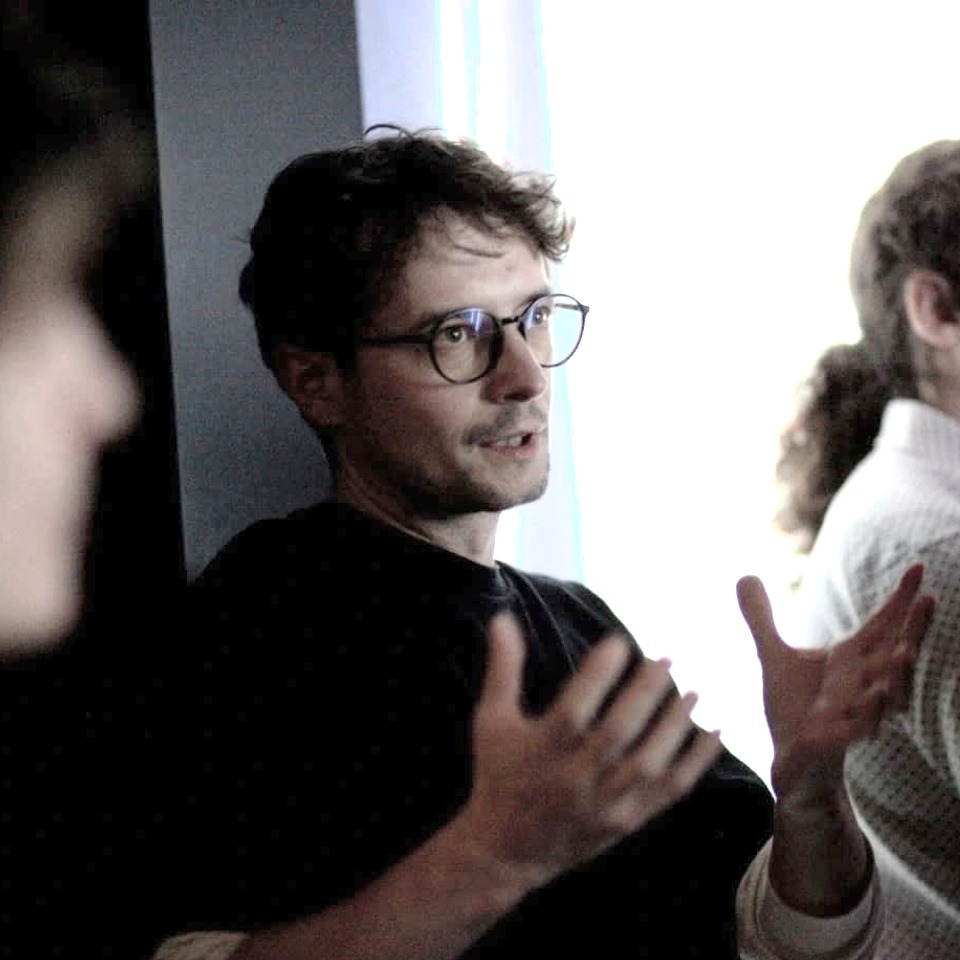
Nicoleta Mihaela Herăscu brings over 16 years of experience in managing and implementing projects funded by the state budget and EU programs—including the European Social Fund (ESF), European Regional Development Fund (ERDF) and the EEA Financial Mechanism. She holds a Master’s degree in Program and Project Management alongside multiple professional certifications.
At UNATC, where she has been a team member for 9 years, Nicoleta oversees technical and financial reporting, manages institutional platforms (MySMIS2021, EVoC, proiecte.pnrr.gov.ro), and liaises with funding agencies. Her key project contributions include: MET – Developing a Methodology of Therapy Through Theatre with an Effect at the Neurochemical and Neurocognitive Levels (Competitiveness Operational Programme 2014–2020), STAD – Social Transmission of Cognitive and Emotional States in the Care of Alzheimer’s Disease Patients (EEA Financial Mechanism 2014–2021), Digital Sensory (Institutional Development Fund / Ministry of Education), PAF! First Artist in the Family! (ESF+ / Education and Employment Programme 2021–2027), ViWAS – Virtual Worlds Skills Academy (State Budget / UEFISCDI), where she serves as Technical Lead.
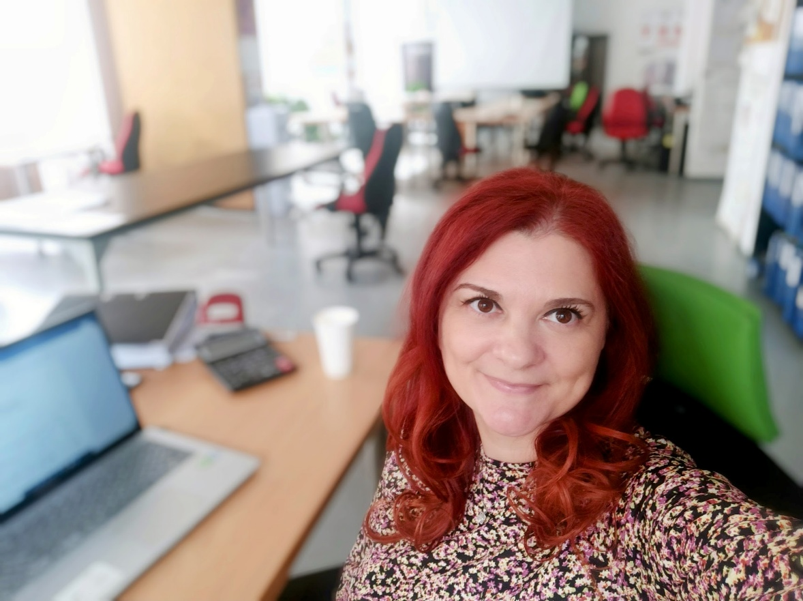
Christina Berea is a support staff member with experience in career guidance at the National University of Theatre and Film “I.L. Caragiale” in Bucharest, as well as in collaboration with independent arts organizations, and in event coordination. Her work focuses on supporting students and graduates, facilitating access to professional and educational opportunities, and strengthening connections with the cultural and creative sector.
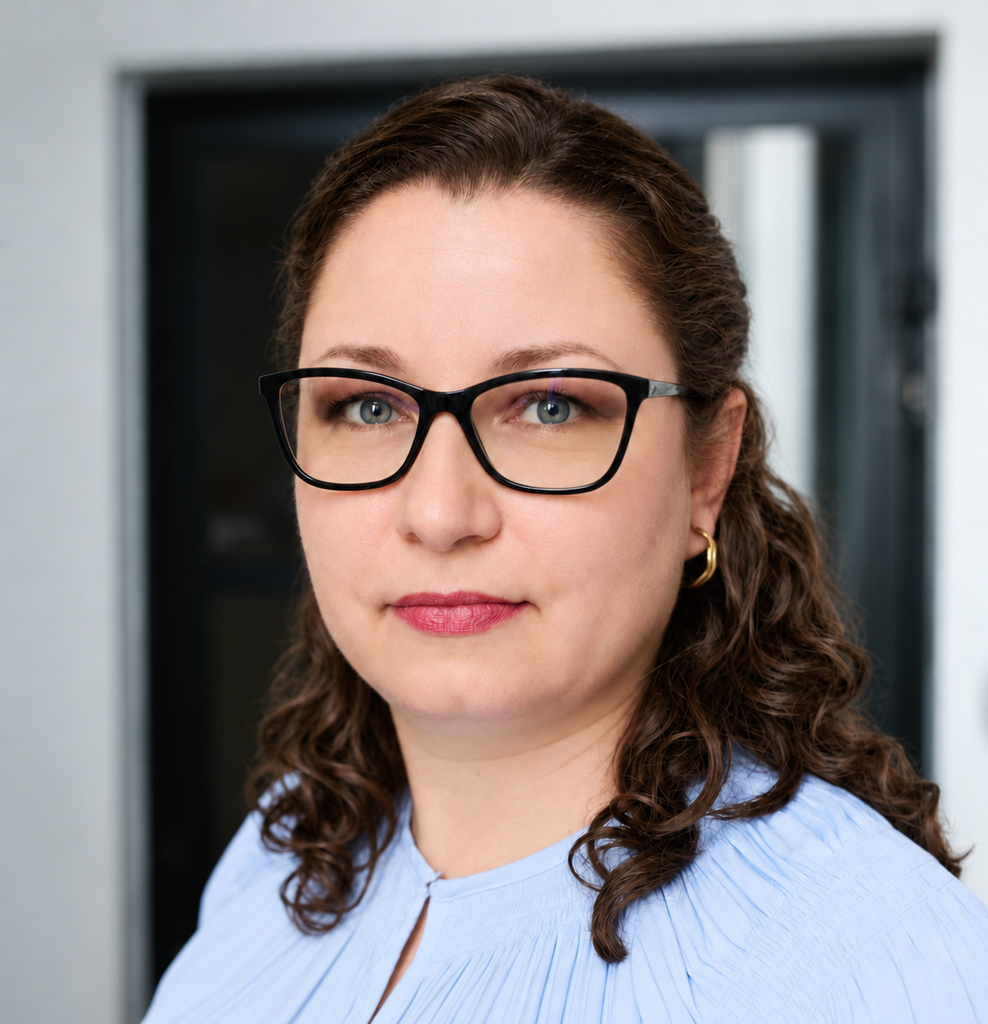
Andrei Lăcraru is Head of Academic Management and Student Affairs at the “I.L. Caragiale” National University of Theatre and Film in Bucharest. His work focuses on academic administration, student support, institutional processes, and the coordination of activities connecting academic structures with students’ needs. Within the ViWAS project, he contributes his experience in higher education management and institutional development, with a particular interest in improving academic processes and the student experience.
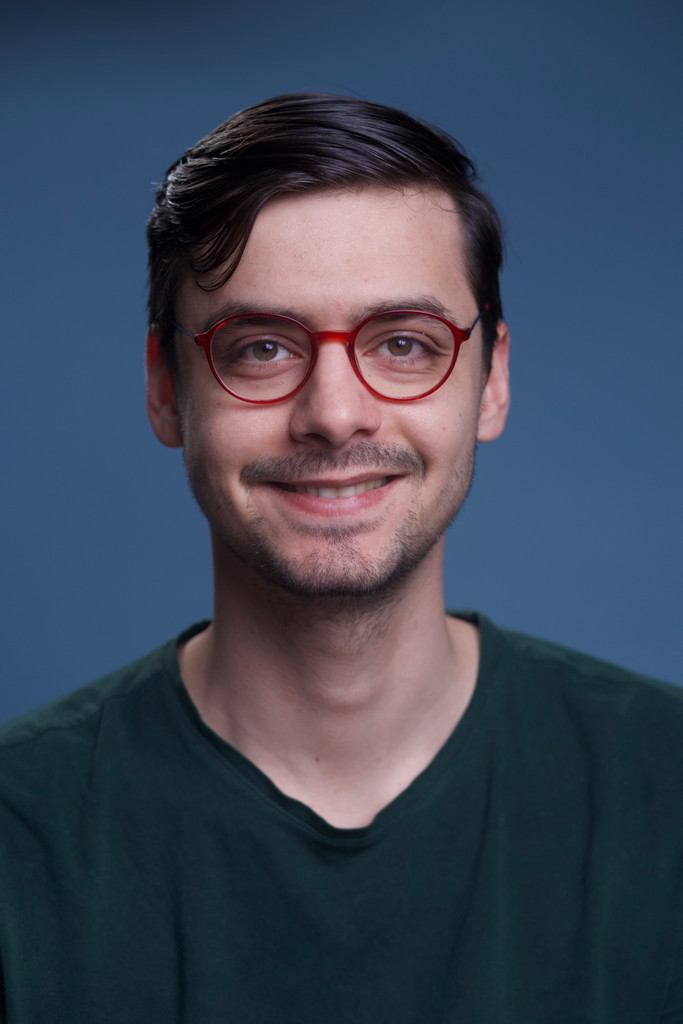
Maria Mandea is an artist, game designer and researcher working with play as an artistic medium. Researcher within the ViWAS project at the Department of Research, Development and Innovation, UNATC, associate lecturer in the Art of Game Design master’s program and co-founder of Institutul Jocului, a platform for artistic games, she holds a PhD in Visual Arts from the National University of Arts in Bucharest.
Her work is situated at the edges of play, where games meet contemporary art, scenography, public space and social life. Through game-installations, immersive environments, stop-motion VR and stage design, shown at the National Museum of Contemporary Art in Bucharest and the Ars Electronica Center in Linz, she examines how designed objects and spaces shape attention, action and the relations between players.
She calls this approach expanded game design: play as a form of artistic research and as a relational model that makes visible the rules we live by. Her research explores the tension between immersion and critical distance and the continuity between analog and virtual play, framing the game designer as an engaged artist and games as a shared medium for common understanding. Her work is published by Palgrave Macmillan, the Design Research Society and other international journals.
https://orcid.org/0000-0003-4118-921X